
Smart Operations Command Centre
A unified operations dashboard integrating all infrastructure domains — from traffic and utilities to security and environmental monitoring — into one operational picture.
01 / 05Information security for cloud delivery

ISO/IEC 27001
ISO/IEC 27001 certified
Why this practice exists
Modern infrastructure generates data from thousands of endpoints — sensors, cameras, meters, vehicles, and systems. Our smart infrastructure practice turns this data into operational intelligence, connecting physical assets through our CityPulse™ platform to provide real-time visibility, predictive maintenance, incident management, and sustainability monitoring across the full infrastructure estate.
The starting point
The numbers that shape this practice. Market figures come from published research; delivery figures come from Techbanq engagements.
enterprise platforms engineered in-house
typical operational efficiency target at city scale
telemetry integrated from field devices and historians
typical energy intensity reduction target at scale
How it shows up day to day
NEOM, the Red Sea, Diriyah, Qiddiya — each will operate at a scale and complexity the region has not run before. The technology platforms have to be designed years before the first resident or operator arrives.
Ports, airports, grids, and water networks have to be upgraded while they run. There is no maintenance window long enough to swap the operating system; the change has to happen alongside live operations.
Traffic, lighting, security, environment, and utilities each procured their own systems. The data sits in five separate platforms and the operator on shift sees none of them in one place.
Saudi Green Initiative, UAE Net Zero 2050, and authority-level carbon targets are written into licence conditions. The infrastructure metering and reporting capability is rarely there at the same depth.
Why now
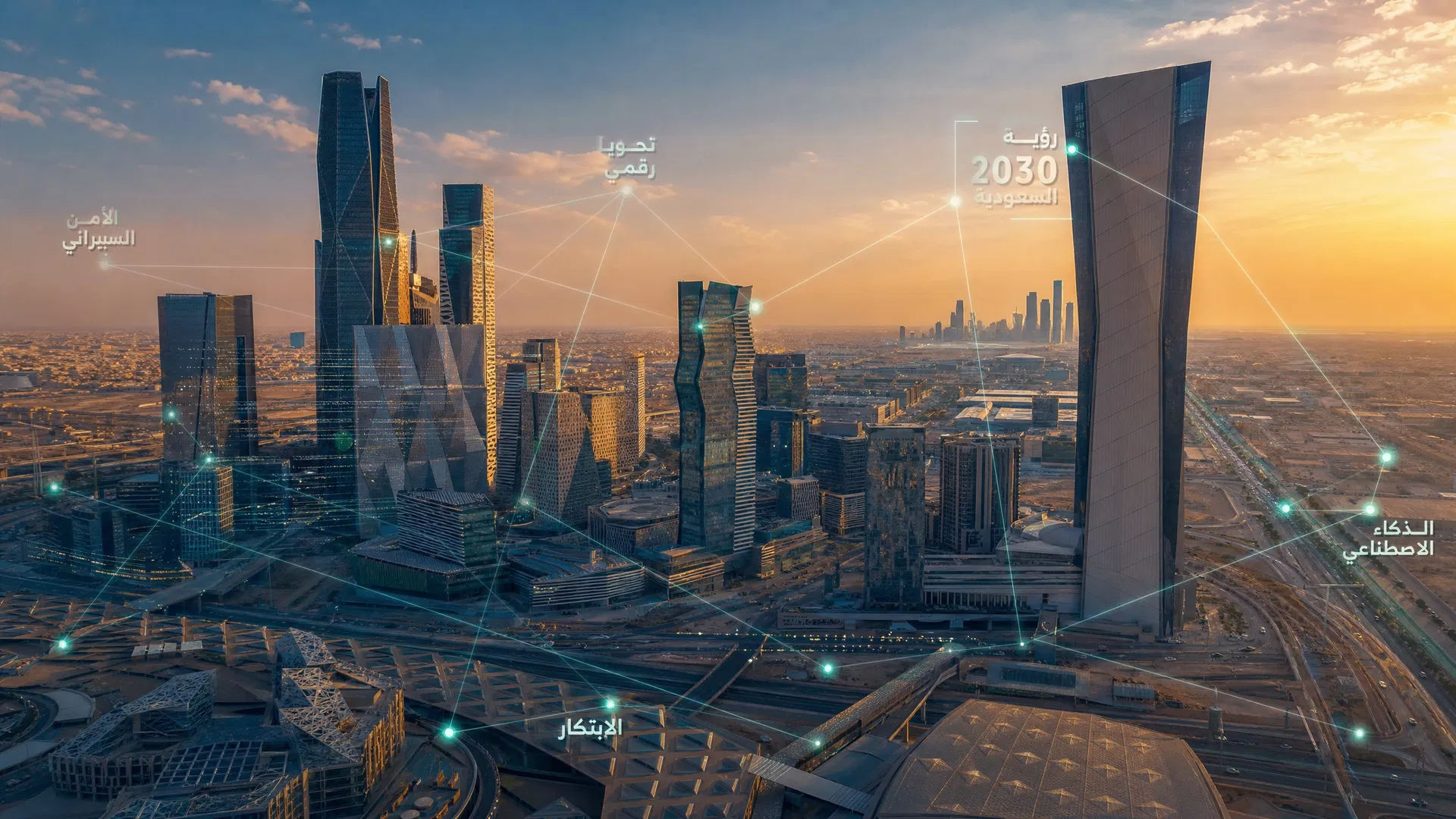
NEOM, the Red Sea, King Salman Park, Qiddiya, Diriyah, and the next generation of Saudi ports and airports are being designed as integrated digital systems from day one. The infrastructure-as-built will not be operable without a connected systems layer that fuses sensors, video, building management, and command-centre intelligence into a single operational picture.
At the same time, the Saudi Green Initiative and TCFD/ISSB disclosure regimes have pulled energy, water, and carbon performance into the same reporting layer as safety and operations. Cities and infrastructure operators now need a single intelligence platform that is auditable for sustainability disclosure and operable for real-time response — a brief that did not exist five years ago.
The 2030 milestone is operational readiness, not handover. The smart-infrastructure layer has to be live, instrumented, and integrated with city services before the gates open.
Water, energy, and emissions performance are now disclosure-grade and PIF-tracked. Infrastructure without a digital-twin and a sustainability evidence layer cannot satisfy the funding case.
City Operations Centres, Port Operations Centres, and Airport Operations Centres are now the architectural pattern — not stand-alone dashboards. Integration with mobility, energy, public safety, and visitor systems is the deliverable.
Bentley iTwin, Esri ArcGIS, and Siemens MindSphere stacks have made operational digital twins economically viable at city scale. The pattern is no longer experimental — it is the procurement default.
How we help
Each card below is a piece of work with an owner, a delivery team, and outputs the sponsor can see. If one of them is what you need right now, the rest can wait.
How we work
Every phase has a named owner, named deliverables, an estimated timeline, and a decision at the end.
We survey the physical estate — sensors, cameras, meters, vehicles, and the networks behind them — and map which endpoints exist, which are usable, and where coverage gaps sit. The output frames what real-time visibility is achievable today and what instrumentation it needs.
What you get
Real-time operational visibility across the entire infrastructure estate
Infrastructure incident response time reduced 50–70%
Energy and resource consumption reduced 15–30%
Maintenance cost per infrastructure asset reduced 20–40%
Find out how quickly these outcomes can land in your operation.
Schedule a consultationSector fit
Every sector has its own pressure points. Pick yours to see the complexity we work inside and the use case we deploy.
Operational complexity
Mixed-use developments with tens of thousands of buildings, mobility assets, and utility connections under a single operating authority.
What we deploy
Unified operations command centre integrating mobility, utilities, security, and environment into one situational picture for the city operator.
Sector · Smart cities and giga-projects
Inside this practice
Four deep dives inside this practice. Some clients start with just one; each has its own page, its own approach, and named deliverables.
White paper
2TB average daily data generated by a mid-size complex enterprise deployment
55% reduction in operational incident response time with real-time monitoring architecture
38% improvement in asset utilisation from data-driven intelligent scheduling
36 pages · 20 min read
Read the report2TB
average daily data generated by a mid-size complex enterprise deployment
Techbanq Research
Not marketing promises. These numbers have repeated across the engagements we have delivered on this practice.
Faster incident response time across the integrated infrastructure estate.
Reduction in energy and water consumption from cross-domain optimisation.
Lower maintenance cost per asset through condition-based scheduling at city scale.
Reporting alignment with the ISO 37120 smart-city indicator set and the Saudi Green Initiative metric stack.
Governance & assurance
The platform is built so its operational outputs, its sustainability evidence, and its security posture are all defensible in writing.
City performance indicators and smart-city services aligned to the ISO 37120 / 37122 measurement frameworks so the operating evidence is comparable, auditable, and tender-ready.
Energy, water, and emissions data instrumented to TCFD and ISSB disclosure standards and tied to Saudi Green Initiative reporting — the sustainability evidence is generated from the platform, not assembled annually.
Operational-technology security aligned to IEC 62443 zone-and-conduit models and the NCA OT control framework so the connected infrastructure does not become the attack surface.
Visitor flow, biometric access, and surveillance footage handled under PDPL retention, consent, and access rules so the public-safety estate satisfies privacy review.
Every twin asset, model version, and integration interface logged in a configuration database so the as-operated picture is reconstructable for inspection and post-incident review.
Technology ecosystem
We deliver on the platforms that actually run the enterprise, not a stack locked to one vendor. Selection follows your operating environment, not a reseller agreement.
21 tools across 4 categories
IoT and connectivity
City and infrastructure OS
Video and sensor estate
Standards and disclosure
Frequently asked questions
Detailed answers on how this practice works in a GCC enterprise environment.
Strategy
Governments and enterprises across the Gulf are committing significant capital to AI transformation. The organisations seeing results are those that treated AI as a strategic management question before treating it as a technology question.
10 min readRisk & security
The enterprise security function is evolving from a compliance obligation into a source of operational intelligence. The transition requires more than new technology — it requires a different conception of what security is for.
Data & analytics
Most organisations approach data architecture as an IT infrastructure question. The firms that extract the most business value from their data treat it as a strategic design question — one that belongs in the boardroom, not just the server room.
Where this connects
A practice rarely comes alone. Each one below is where clients usually end up after this one, or where they start before getting to it.
Industries served
A short conversation about your environment and the smart infrastructure decision you want to improve. One hour, no cost, no commitment.
What happens next
Or reach us directly


 Cisco IoT
 Schneider EcoStruxure
 Azure IoT
 AWS IoT Core
 Bosch IoT Suite
 Hitachi Lumada
 Siemens MindSphere
 IBM Maximo
 Esri ArcGIS