
Saudi Arabia
Riyadh
The Kingdom's administrative and financial centre, and where most enterprise technology decisions are actually signed.
Riyadh concentrates the two buyer types that set the tone for the whole market: government and semi-government entities, and the headquarters functions of the large Saudi corporates. Both buy differently from an operating site. Procurement is more formal, the security review is longer, and the system is expected to integrate with national platforms rather than stand alone.
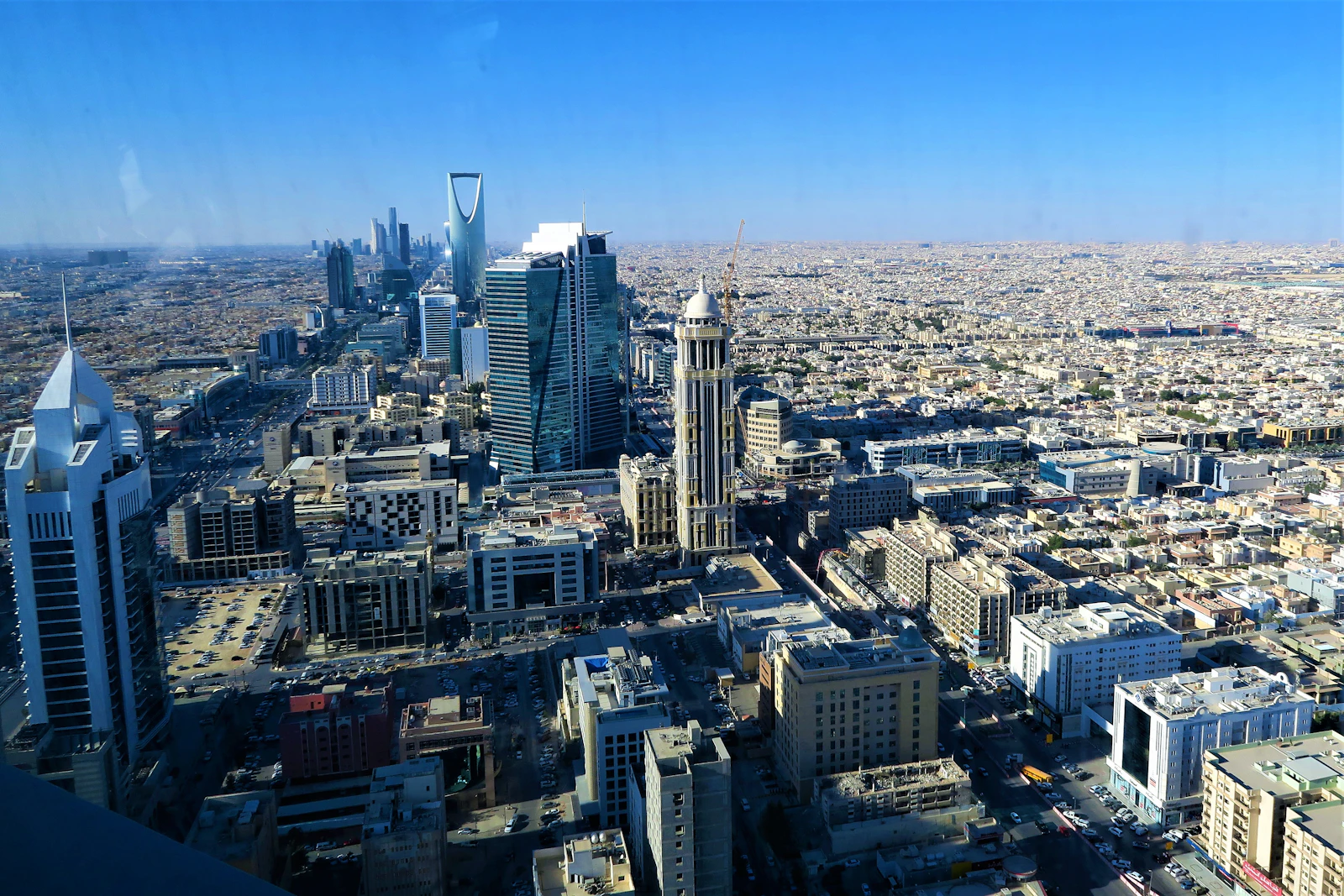
Our office in Riyadh

City context
What makes Riyadh different
We have an office in Riyadh
Our team there works alongside our engineering hubs in Lahore and Karachi.
Riyadh concentrates the two buyer types that set the tone for the whole market: government and semi-government entities, and the headquarters functions of the large Saudi corporates. Both buy differently from an operating site. Procurement is more formal, the security review is longer, and the system is expected to integrate with national platforms rather than stand alone.
The financial cluster around the King Abdullah Financial District adds a third pattern. Banks, insurers and the newer payment firms are supervised by the Saudi Central Bank, so their technology programmes carry a resilience and evidence burden that a comparable retail or logistics programme does not.
The practical consequence for delivery is that Riyadh work is rarely purely technical. A typical engagement has a security architecture thread, an integration thread against a government or sector platform, and a documentation thread that has to survive review long after the build team has moved on.
Economic anchors
What a local buyer would recognise
- King Abdullah Financial District
- Al Olaya business district
- King Fahd Road corporate corridor
- Riyadh Front and the exhibition district
- Diriyah Gate development
The problems
What organisations in Riyadh run into
These are patterns we see here specifically, not a general list of transformation challenges.
- 01
Integration with national platforms is the long pole
Riyadh systems rarely stand alone. They authenticate against national identity services, exchange data with sector platforms, and inherit those platforms' availability and change calendars. Schedules that ignore this consistently slip, because the integration dependency is not under the programme's control.
- 02
Security review arrives after the architecture is fixed
The common failure pattern is a solution designed for functionality, then presented to the security function late. Rework at that point is expensive because it touches network design, identity and data placement at once. Bringing the control mapping into the design phase costs weeks; retrofitting it costs quarters.
- 03
Capability transfer is part of the contract
Riyadh buyers increasingly require that the internal team can operate the system without the vendor. That changes how the work should be run — documentation, runbooks and paired working are deliverables in their own right, not a closing formality.
The buyer
Who we work with in Riyadh
CIOs and CISOs in government entities and large corporates, transformation office directors working to programme milestones, and heads of technology at banks and payment firms answering to Saudi Central Bank supervision.
Dominant sectors
Services
What we do in Riyadh
Only the services with genuine commercial relevance to this city are listed — not everything we offer.
Regulatory context
What applies to organisations in Riyadh
Regulatory frameworks apply at Saudi Arabia level rather than city level. The full explanation, with links to primary sources, is on the market page.
Regulators and frameworks in Saudi ArabiaFrameworks in play
- NCA ECC
The Essential Cybersecurity Controls — the national minimum baseline for government entities and for private operators of critical national infrastructure. The 2024 revision expanded both scope and control depth.
- NCA CCC
Cloud Cybersecurity Controls — the requirements applied to cloud service providers and to the entities consuming their services.
- Aramco SACS-002 / CCC
Saudi Aramco's third-party cybersecurity standard. Vendors are classified into CCC or the on-site CCC+ tier, with audits carried out by firms Aramco authorises.
- PDPL
The Personal Data Protection Law, enforced by SDAIA. Sets lawful basis, transfer, retention and breach-notification duties for anyone processing personal data in the Kingdom.
- SAMA Cyber Security Framework
The mandatory framework for SAMA-regulated entities, organised across governance, risk, operations, third-party security, resilience and compliance.
Common questions
Working with us in Riyadh
Does Techbanq have an office in Riyadh?+
Yes. Riyadh is the base for our GCC work and the point of contact for engagements across the Kingdom. The address and directions are on our locations page.
Can your team attend on-site workshops in Riyadh?+
Yes. Discovery workshops, architecture reviews and steering sessions are run on-site in Riyadh as standard. Ongoing engineering is delivered from our hubs, with agreed on-site presence at the points in a programme where it matters.
Do you work with government entities in Riyadh?+
We work on government and semi-government programmes, subject to the entity's own vendor registration and security clearance processes. Those processes vary by entity and we scope them into the timeline rather than assuming they are quick.
Elsewhere in Saudi Arabia
Related reading
Discuss your work in Riyadh
A short conversation is usually enough to establish whether this is work we can help with in Riyadh. One hour, no cost, no commitment.
What happens next
- 1We reply within one business day.
- 2A 30-minute scoping call with a senior consultant.
- 3A written proposal with scope, team, and timeline.
Or reach us directly