01
Failure prediction
Models trained on your network history flag the cells, links, and equipment most likely to fail next — days ahead, not minutes.
Networks that fix problems before customers feel them
We build the monitoring, prediction, and automation that keep national networks running: fewer outages, faster fixes, and a network team that sees problems coming.
Information security for telecom systems

ISO/IEC 27001
ISO/IEC 27001 certified
The sector as we see it
A telecom operator lives and dies by two numbers: how often the network breaks, and how fast it recovers. Most operators still learn about both from customer complaints. We change that by putting the network’s own data to work — predicting failures, cutting the noise in the operations centre, and automating the fixes that do not need a human.
What we keep hearing
Four things we hear on almost every visit to this sector. If one sounds familiar, you know why we are here.
The first sign of a fault is often a complaint call. By then the damage to trust is done.
Operations centres receive thousands of alerts a day. The one that matters looks like all the others.
Recovery time depends on who is on shift. Their knowledge lives in their heads, not in the systems.
5G, fibre, and enterprise products each add tools and dashboards, and none of them talk to each other.
What we build here
Models trained on your network history flag the cells, links, and equipment most likely to fail next — days ahead, not minutes.
Thousands of raw alerts collapse into a short list of real incidents, each with the likely cause attached.
The fixes engineers repeat every week become scripts that run in seconds, with an audit trail.
Radio, core, transmission, and customer impact on a single screen the whole operations team works from.
What we deploy
Each one goes in with an owner named from your team, so it keeps working long after handover.
Schedule a consultationNetwork monitoring that predicts faults before they happen
An operations centre view that shows customer impact, not just equipment status
Automation for the repeat fixes that eat engineering time
Capacity forecasts grounded in real usage, not spreadsheets
Reports regulators accept without a data scramble
How we help
White paper
89% reduction in mean time to detect network faults
96% reduction in actionable alert volume through AI correlation
$14M+ annual NOC cost reduction in a tier-1 operator deployment
32 pages · 18 min read
Read the report89%
reduction in mean time to detect network faults
Techbanq Research
Each number below was measured at a client in this sector, before and after go-live. None of them come from a slide.
typical network reliability improvement targeted
monitoring that catches outages before customers feel them
operations coverage with named engineers

AI strategy
Most enterprise AI programmes fail not because of the technology but because of how organisations approach them. The firms capturing lasting value share three disciplines that have nothing to do with model performance.
9 min read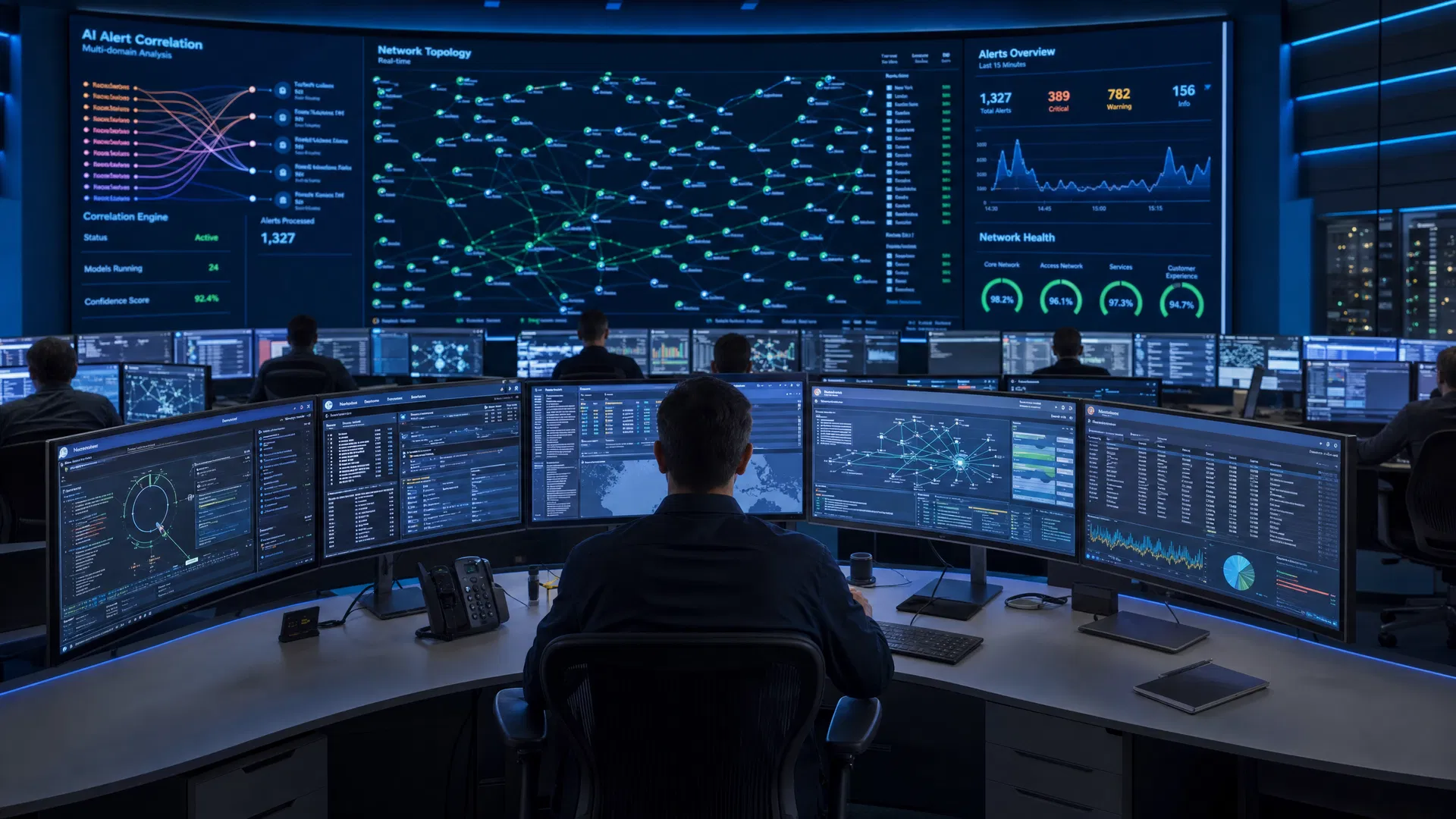
Telecommunications
Telecom operators have invested heavily in network infrastructure. The returns on that investment are increasingly determined not by the infrastructure itself but by the intelligence layer running on top of it.
8 min read
Strategy
Governments and enterprises across the Gulf are committing significant capital to AI transformation. The organisations seeing results are those that treated AI as a strategic management question before treating it as a technology question.
10 min readA short conversation about your telecommunications operation and the decision you want to improve. One hour, no cost, no commitment.
What happens next
Or reach us directly