
Makkah
AI development and automation in Makkah
Enterprise AI work means putting a model inside an operational process — with the data pipeline, monitoring, fallback behaviour and cost control that turn a demonstration into something a business can depend on.
The gap in most organisations is not between no AI and some AI. It is between a pilot that impressed a steering committee and a system that runs every day without someone watching it. Pilots are built on curated data, evaluated by their builders and judged on best-case output. Production systems face the data the organisation actually has.
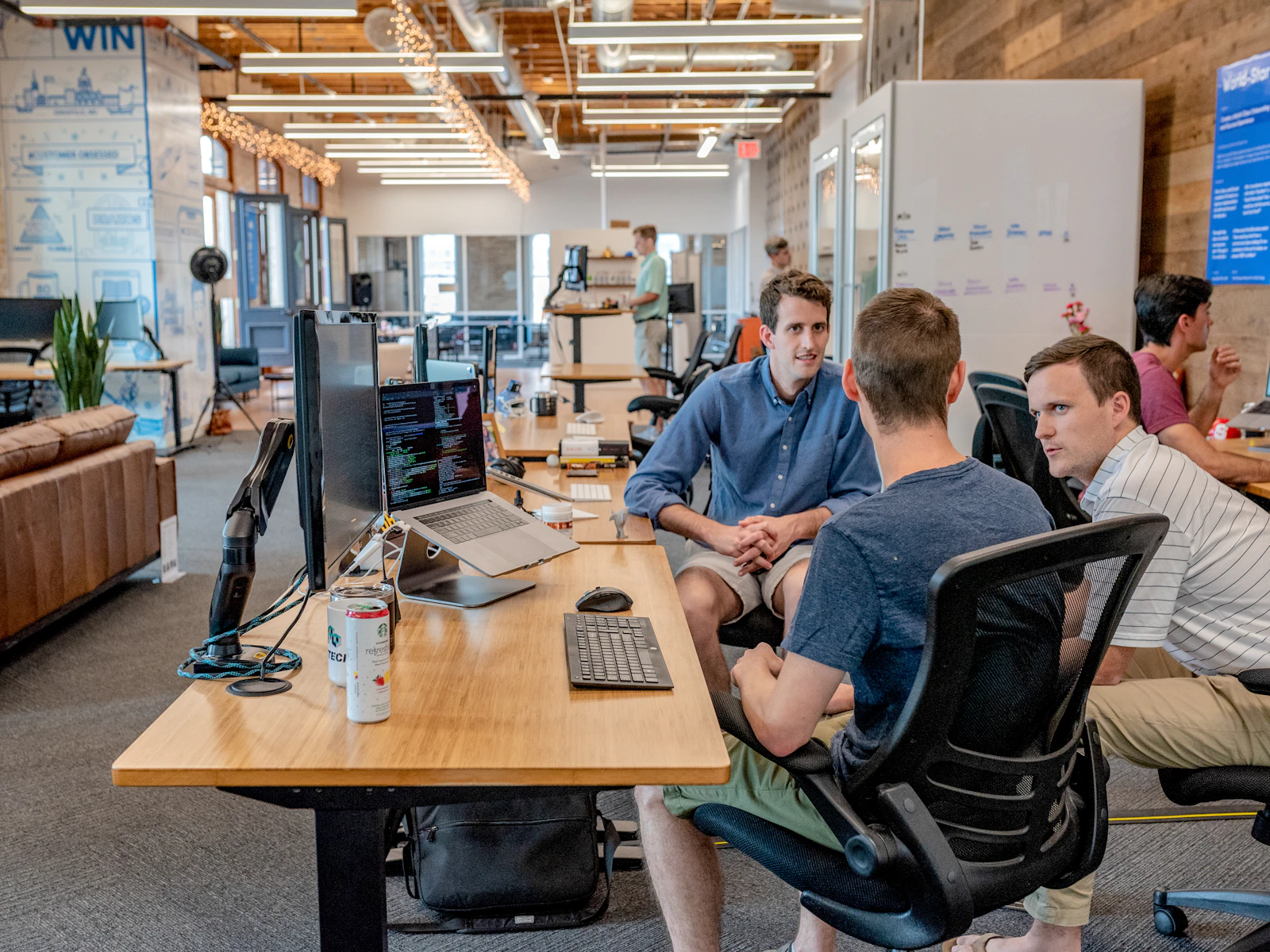
Serving Makkah from our Riyadh office and our engineering hubs in Lahore and Karachi

The problem
What is usually behind this search
We do not have an office in Makkah
We serve organisations there from our Riyadh office and our engineering hubs in Lahore and Karachi, travelling for the parts of an engagement that need to happen in person.
The gap in most organisations is not between no AI and some AI. It is between a pilot that impressed a steering committee and a system that runs every day without someone watching it. Pilots are built on curated data, evaluated by their builders and judged on best-case output. Production systems face the data the organisation actually has.
What separates the two is unglamorous: where the data comes from and how fresh it is, what happens when the model is wrong or the provider is down, how much a request costs at real volume, who reviews outputs, and how you tell whether quality has drifted since launch. Those questions are the work.
Capabilities
What we actually deliver
Retrieval-based knowledge systems
Assistants grounded in your own documents and data, with citations back to source so an answer can be checked rather than trusted.
Arabic-capable conversational systems
Chat and voice systems that handle Arabic properly — dialect variation, mixed Arabic and English input, and Arabic names and addresses without corrupting the record.
Document and workflow automation
Extracting structured data from invoices, forms, contracts and reports, and routing it into the system that needs it with a human review step where the cost of an error justifies one.
Forecasting and operational prediction
Demand, maintenance and risk models built on your operating history, evaluated against what actually happened rather than against a held-out sample alone.
Agent and process automation
Systems that take actions in other systems, with the permission model, audit trail and stop conditions that make an automated action reversible and accountable.
Evaluation and monitoring
A test set that reflects real inputs, quality measurement that continues after launch, and cost and latency tracking per request so economics stay visible.
Local context
Why this is different in Makkah
Makkah's operating problem has no real parallel in commercial technology: extremely high density, a fixed physical envelope, a population that changes completely every few days, and a service window where failure is not recoverable after the fact. Systems here are judged on behaviour under load, not on features.
The commercial base around that is hospitality and pilgrim services — hotels, transport operators, catering, retail and the agencies that package and manage groups. Their systems have to coordinate with permit and scheduling arrangements outside their control, which makes integration and graceful failure far more important than a rich interface.
The seasonal shape also determines how work should be delivered. Nothing significant changes during the season. Delivery windows are the months between, and testing has to simulate a peak that cannot be reproduced in production.
What buyers in Makkah run into
- 01
The system must fail gracefully, because it will be tested at the limit
At peak, some component will saturate. The design question is what happens next: whether the platform sheds optional features and keeps the critical path running, or whether the whole service becomes unavailable. That behaviour has to be designed deliberately; it does not emerge by itself.
- 02
Delivery windows are narrow and fixed
Releases cannot land during the season, so the calendar is set by the season rather than by the project plan. That requires a delivery approach with real staging environments and rehearsed rollbacks, because there is no option to fix forward at the worst moment.
- 03
Coordination happens across organisations, not inside one
A pilgrim's journey crosses several independent operators. No single system owns it end to end, so useful technology here is about clean interfaces and reliable data exchange between parties rather than a comprehensive platform one organisation controls.
How an engagement runs
The stages, and what happens in each
Frame
Define the decision or task being automated and what a good outcome measurably looks like.
Assess data
Establish what data exists, its quality, and whether it can support the intended outcome. This step regularly changes the plan.
Prototype
Build against real data and evaluate against a test set that includes the awkward cases, not only the clean ones.
Productionise
Pipeline, monitoring, fallback path, permission model, cost controls and integration into the process it serves.
Measure
Track quality, cost and adoption after launch, and act on drift before users notice it.
Regulatory frame
What governs this work
References for buyers. Techbanq does not issue certifications, approvals or compliance determinations — those rest with the authority and its assessors.
The full frame in Saudi Arabia- NCA ECC
The Essential Cybersecurity Controls — the national minimum baseline for government entities and for private operators of critical national infrastructure. The 2024 revision expanded both scope and control depth.
- NCA CCC
Cloud Cybersecurity Controls — the requirements applied to cloud service providers and to the entities consuming their services.
- Aramco SACS-002 / CCC
Saudi Aramco's third-party cybersecurity standard. Vendors are classified into CCC or the on-site CCC+ tier, with audits carried out by firms Aramco authorises.
- PDPL
The Personal Data Protection Law, enforced by SDAIA. Sets lawful basis, transfer, retention and breach-notification duties for anyone processing personal data in the Kingdom.
- SAMA Cyber Security Framework
The mandatory framework for SAMA-regulated entities, organised across governance, risk, operations, third-party security, resilience and compliance.
Technologies
What we work with
Cost
What moves the price
We do not publish fixed prices, because any figure quoted before the scope is known is a guess. These are the variables that actually determine it.
Data readiness
If the data needs cleaning, joining or labelling first, that work frequently exceeds the model work.
Integration depth
A standalone assistant is cheap. One that reads from and writes to three operational systems is not.
Accuracy requirement
The effort to move from useful to reliable is larger than the effort to build the first version. Decide which you need before starting.
Running cost
Model inference is a recurring cost that scales with usage. It should be modelled at expected volume before launch, not discovered on the first invoice.
Language coverage
Arabic and multilingual systems need their own evaluation sets and usually more iteration than an English-only equivalent.
Common questions
What buyers usually ask
Will our data be used to train someone else's model?+
Not without your explicit agreement. Which providers are used, under what terms, and whether data leaves your environment at all are decisions we put in front of you at design time. Where the requirement is that nothing leaves, we design for self-hosted models and say plainly what that costs in capability.
How do you stop the system giving wrong answers?+
You cannot eliminate it, so the design has to assume it. Ground answers in retrieved source documents with citations, constrain what the system is allowed to answer, route low-confidence cases to a person, and measure quality continuously against a test set. Anyone promising a system that is never wrong is describing a demonstration.
Do you build Arabic voice and chat systems?+
Yes. Arabic needs more attention than English equivalents: dialect variation between markets, code-switching between Arabic and English mid-sentence, and name and address handling that does not mangle the record. We build the evaluation set in Arabic rather than translating an English one.
What is a realistic first project?+
Something with a clearly measurable task, available data, and a tolerable failure mode — document extraction with a review step, or an internal knowledge assistant over documentation. A customer-facing system that takes actions is a better second project than a first one.
Other services in Makkah
Related
AI development and automation in other cities
Discuss ai and automation in Makkah
Send us the scope as you understand it today, even if it is incomplete, and we will tell you what we need to know before giving an estimate.
What happens next
- 1We reply within one business day.
- 2A 30-minute scoping call with a senior consultant.
- 3A written proposal with scope, team, and timeline.
Or reach us directly