
Delta Container Terminal Yard Intelligence
A deepwater container terminal moves from manual yard planning to AI-assisted stack and crane scheduling — adding effective capacity without pouring concrete.
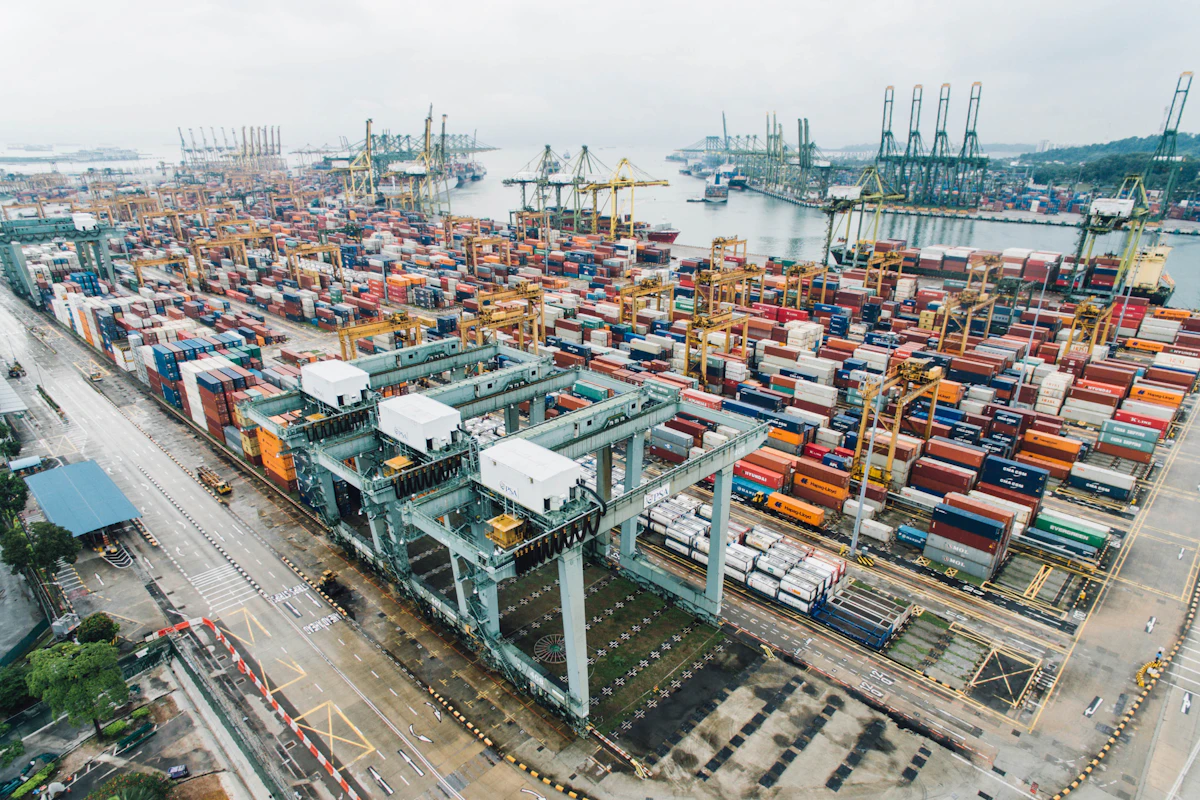
The challenge
The terminal's board had set a growth target requiring 18% additional capacity within 36 months — but a physical expansion would not complete within that window. Terminal leadership needed to determine whether the capacity gain could come from how the existing yard was used, not how big it was, and what that would require analytically.
Discovery
A six-week yard study revealed that 23% of crane moves were rehandles — containers being moved to reach the one underneath. The rehandle rate was not a planning error; it was a structural consequence of yard allocation decisions made on a per-vessel basis with no visibility of the next three vessels in the schedule. The planners understood the problem precisely. What they lacked was an optimisation tool that could work across that time horizon within the decision window available.
Our approach
Diagnostic and optimisation design: conducted the six-week yard study and designed a multi-vessel yard allocation optimiser planning stack positions across the next 72 hours of vessel schedule, not the next vessel alone
TOS integration: integrated the optimiser with the terminal operating system so plans are written back into the existing workflow rather than running as a parallel tool
Crane sequencing programme: added a quay-crane sequencing layer pairing stack decisions with the move plan, reducing the productivity gap between yard and quay
Operations management surface: built a control-tower view for the duty manager surfacing in-shift deviations against plan with recommended response options
The Outcome
The engagement delivered a yard intelligence layer that sits above the existing terminal operating system, optimising stack allocation and crane sequencing across the rolling 72-hour vessel horizon. The planners retain full authority over exceptions; the system eliminates the rehandle volume that no one wanted but the previous planning approach had made unavoidable.
The results
“We bought time on our expansion programme. The yard now delivers the capacity we thought we would have to build for.”